31
MAY
2026
Something has shifted in how architects and interior designers are specifying materials.
The questions being asked on project briefs today are different from a decade ago. It's no longer just "What looks good?" — it's "What lasts? What performs? What's responsible?"
Minimalism has matured from an aesthetic preference into a design philosophy. Sustainability has moved from optional to mandatory. And longevity, once considered a secondary concern, is now central to procurement decisions.
This is exactly the environment in which terrazzo has staged one of architecture's most compelling material comebacks.
Not because terrazzo is trendy.
Because it answers the right questions.
Terrazzo is a composite surfacing material made by embedding chips of marble, quartz, granite, glass, or other aggregates into a binder—traditionally cement and increasingly epoxy—which is then cured, ground flat, and polished to create a smooth, durable finish.
Two primary systems dominate modern applications:
The traditional system, well-suited for poured-in-place applications and exterior-grade projects. It is breathable, durable, and generally carries a lower upfront cost, although it requires sealing and periodic maintenance.
The contemporary standard for commercial interiors. It features a thinner profile, exceptional chemical resistance, low porosity, and far greater design flexibility through color and pattern customization.
Historically, terrazzo dates back centuries. Venetian craftsmen were creating early forms of terrazzo by repurposing marble fragments into durable surfaces. During the mid-20th century, terrazzo became a staple material in airports, schools, hospitals, and civic buildings worldwide.
Although cheaper alternatives later gained popularity, terrazzo never lost its fundamental strengths.
Today, it is being specified again—not out of nostalgia, but because its performance aligns perfectly with modern architectural priorities.
The resurgence of terrazzo is driven by a convergence of practical, aesthetic, and environmental demands that few materials can satisfy simultaneously.
Minimalist architecture depends on surfaces that create visual harmony without overwhelming a space.
Terrazzo achieves this balance naturally.
Its distinctive composition creates depth and texture while maintaining a calm, refined appearance. Unlike plain concrete, which can feel cold and industrial, or manufactured surfaces that often appear artificial, terrazzo offers a sense of authenticity and warmth.
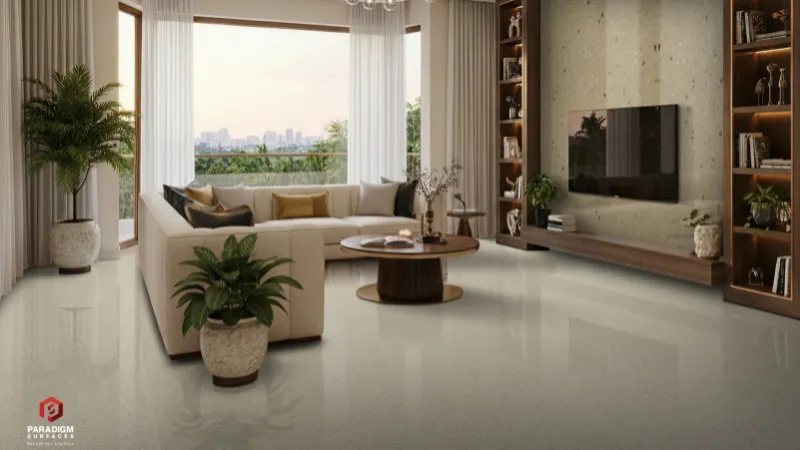
When used across large floor areas, walls, staircases, or custom installations, terrazzo creates the visual continuity that contemporary interiors rely upon.
This explains why terrazzo has become increasingly common in luxury hospitality, premium retail environments, and modern commercial developments—not as a decorative feature, but as the foundation of the overall design language.
Very few architectural materials can demonstrate the long-term performance record that terrazzo can.
Many terrazzo installations completed in public buildings during the 1950s and 1960s remain in active use today. Decades of foot traffic have not diminished their structural integrity or visual appeal.
This longevity is one of terrazzo's most compelling advantages.
Modern epoxy terrazzo systems offer excellent resistance to abrasion, impact, and daily wear. Their ability to maintain appearance and performance over extended periods makes them particularly valuable in environments where replacement would be disruptive and costly.
Airports, hospitals, transit hubs, educational institutions, and shopping centres all benefit from this lifecycle durability.
For decision-makers evaluating long-term building performance, terrazzo consistently proves its value.
As sustainability certifications such as LEED and WELL become increasingly important, material choices are receiving greater scrutiny than ever before.
Terrazzo performs strongly in this area.
Many terrazzo aggregates are sourced from recycled glass, reclaimed stone, marble offcuts, and other byproducts that would otherwise become waste. By repurposing these materials, terrazzo contributes to more responsible resource utilization.
However, its greatest environmental advantage lies in its lifespan.
A surface that can remain functional for decades without replacement dramatically reduces material consumption over time. When evaluated across its full lifecycle rather than just initial installation, terrazzo often demonstrates a lower environmental impact than materials requiring periodic replacement.
This combination of sustainability and premium performance makes terrazzo particularly attractive for projects pursuing long-term environmental goals.
One of terrazzo's most underestimated strengths is its extraordinary design versatility.
Architects and designers can customize:
These variables create almost limitless design possibilities.
Terrazzo can feel timeless and classical or bold and contemporary depending on the chosen composition.
Large-format terrazzo applications and poured-in-place systems enable continuous visual planes that many conventional flooring materials struggle to achieve. The ability to minimize visual interruptions helps designers create cohesive spaces with strong architectural character.
For projects where design continuity is critical—such as luxury hotels, flagship retail stores, premium residences, and corporate headquarters—this level of control is invaluable.
Terrazzo is one of the easiest architectural surfaces to maintain when properly specified and installed.
Cement-based systems require sealing, while epoxy terrazzo systems are inherently non-porous and highly resistant to staining. In either case, routine maintenance typically involves simple cleaning with pH-neutral products and standard floor-care procedures.
Unlike many other surfacing materials, terrazzo does not peel, warp, delaminate, or deteriorate under normal use conditions.
Another significant advantage is the absence of grout-heavy surface interruptions, reducing areas where dirt, bacteria, and moisture can accumulate.
For facilities managers overseeing commercial buildings, this translates directly into lower maintenance costs and reduced operational disruption over the life of the property.
Over a 20- to 30-year horizon, these savings can be substantial.
Understanding terrazzo's performance characteristics makes its growing adoption across industries easy to understand.
Transportation environments experience some of the highest foot traffic levels of any building type.
Airports, railway stations, and transit hubs require surfaces that can withstand constant use while maintaining appearance and safety standards.
Terrazzo's exceptional durability, ease of maintenance, and long service life make it a natural choice for these demanding environments.
Many major international airports continue to specify terrazzo because few materials can match its long-term performance.
Luxury hospitality spaces demand a balance between aesthetics and practicality.
Lobby floors, corridors, spas, poolside environments, and public circulation areas must maintain a premium appearance despite continuous guest activity.
Terrazzo offers exactly that balance.
Its seamless appearance enhances the guest experience while its durability reduces long-term maintenance and replacement costs.
The ability to create custom colors, patterns, and aggregate blends also allows hospitality brands to develop distinctive visual identities.
Terrazzo is increasingly being used in high-end residential architecture.
Applications include:
Homeowners and designers appreciate terrazzo's ability to deliver a premium aesthetic without the maintenance demands often associated with natural marble.
The result is a material that feels sophisticated while remaining practical for everyday living.
Retail environments depend heavily on visual identity.
Terrazzo enables brands to create unique spaces that feel intentional and memorable.
Custom aggregate blends, colors, and patterns allow designers to create surfaces that cannot be precisely replicated elsewhere.
This level of customization strengthens brand expression while simultaneously delivering the durability required for high-traffic commercial environments.
Modern workplaces must support aesthetics, functionality, and long-term performance.
Open-plan offices, collaborative environments, and corporate reception areas all benefit from terrazzo's durability and refined appearance.
When paired with appropriate acoustic and substrate systems, terrazzo contributes to comfortable, professional workplace environments while maintaining low maintenance requirements.
Hospitals, universities, government buildings, and public institutions prioritize longevity and hygiene.
Terrazzo's non-porous surface properties, chemical resistance, and decades-long lifespan make it particularly well suited to these environments.
For organizations seeking maximum value over the life of a building, terrazzo often proves to be one of the most cost-effective long-term surfacing solutions available.
Several major design movements align naturally with terrazzo's characteristics.
Contemporary interiors increasingly rely on layered neutral tones rather than bold, single-color surfaces.
Terrazzo naturally supports this approach.
Its aggregate composition introduces subtle visual variation and depth while maintaining an overall sense of restraint.
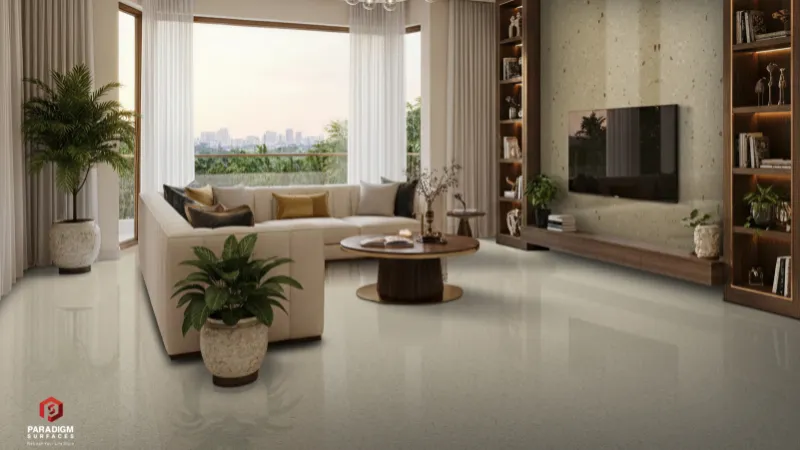
A soft grey base with carefully selected aggregates, for example, can feel simultaneously minimal and visually rich.
This balance is one reason terrazzo continues to resonate with architects and interior designers.
Modern architecture increasingly favors uninterrupted visual experiences.
Designers seek connections between floors, walls, stairs, furniture elements, and surrounding spaces.
Terrazzo is uniquely positioned to support this design language.
Whether installed as precast elements or poured-in-place systems, terrazzo can create seamless visual transitions that reinforce spatial continuity and architectural clarity.
Today's architects are frequently required to justify material selections not only aesthetically but environmentally.
Clients, developers, and certification bodies increasingly expect clear sustainability credentials.
Terrazzo's use of recycled aggregates, long service life, and low lifecycle replacement requirements provide a credible sustainability story backed by measurable performance rather than marketing claims.
This makes terrazzo particularly attractive for projects pursuing environmentally responsible outcomes.
Although terrazzo offers numerous advantages, successful implementation requires careful planning and expertise.
Poured-in-place terrazzo systems require experienced installers, proper substrate preparation, and strict quality control procedures.
Precast terrazzo products are generally more straightforward to install but still require appropriate installation systems and substrate tolerances.
Many performance issues attributed to terrazzo are actually installation-related rather than material-related.
For this reason, installation quality should never be treated as an afterthought.
Finish selection affects more than aesthetics.
Matte, honed, semi-polished, and polished surfaces each offer different visual characteristics, maintenance requirements, and slip-resistance properties.
The appropriate finish should always be determined by the intended application and performance requirements rather than appearance alone.
One of the most common misconceptions surrounding terrazzo relates to cost.
While the initial investment is typically higher than many alternative surfacing materials, lifecycle economics often tell a very different story.
A surface that lasts decades without replacement can deliver significantly lower total ownership costs than materials requiring periodic removal and reinstallation.
Serious project evaluations should therefore consider lifetime value rather than focusing exclusively on upfront expenditure.
On large-scale commercial terrazzo projects, supplier quality has a direct impact on the final result.
Color consistency, chip distribution uniformity, dimensional precision, and finish quality are not minor details—they are critical factors that influence how a completed installation looks and performs.
A single inconsistent batch in a hotel lobby, corporate headquarters, or retail flagship store can create costly remediation challenges and project delays.
Beyond product quality, supply reliability matters just as much.
Large projects require dependable lead times, consistent production capacity, and technical expertise from suppliers who understand real-world installation conditions.
The best supplier is rarely the cheapest.
It is the supplier whose materials perform as specified, whose quality remains consistent across batches, and whose team can provide meaningful technical support throughout the project lifecycle.
For architects, contractors, and developers, that reliability often proves more valuable than short-term cost savings.
Terrazzo offers enormous aesthetic flexibility, but visual appeal should never be the only consideration.
Material selection should always account for:
Projects that focus exclusively on appearance often encounter avoidable performance issues later.
Even the highest-quality terrazzo system cannot compensate for poor installation practices or inadequate substrate preparation.
Successful terrazzo installations depend on:
Installation quality and material quality are inseparable.
One of the most common mistakes in material procurement is comparing only upfront costs.
A lower initial investment may appear attractive during budgeting, but repeated maintenance, repairs, and replacement cycles often create significantly higher long-term expenses.
Terrazzo's value becomes most apparent when evaluated across decades rather than years.
For projects intended to perform throughout a building's lifespan, lifecycle cost analysis should always be part of the specification process.
Modern architecture increasingly prioritizes durability, sustainability, and design continuity.
These are areas where terrazzo has consistently excelled for decades.
As architects and developers move away from short-lifecycle materials, terrazzo has naturally returned to the forefront of material selection.
Absolutely.
Luxury residential projects increasingly incorporate terrazzo into flooring, bathrooms, kitchens, staircases, feature walls, and custom surface applications.
Its combination of aesthetics, durability, and low maintenance makes it particularly well suited to contemporary residential design.
The initial investment is generally higher.
However, when maintenance requirements, durability, and replacement costs are considered over the long term, terrazzo often delivers a lower total cost of ownership.
For projects intended to last decades, terrazzo can represent a highly economical choice.
Epoxy terrazzo offers:
Cement terrazzo offers:
The appropriate system depends on project requirements, environmental conditions, and performance objectives.
Yes.
Cement-based terrazzo is commonly specified for exterior applications when appropriate drainage, movement joints, and installation practices are incorporated into the design.
Epoxy terrazzo is generally not recommended for direct outdoor exposure due to UV sensitivity.
Terrazzo's resurgence in modern architecture is not simply another design trend.
It is the result of a material proving its value repeatedly across generations of architectural projects.
From airports and hospitals to luxury residences and hospitality environments, terrazzo continues to outperform many alternatives in the areas that matter most:
For architects, interior designers, developers, and procurement professionals evaluating surfacing solutions for commercial, institutional, or high-specification residential projects, terrazzo deserves consideration based on performance—not aesthetics alone.
The materials that define exceptional buildings are those that continue performing decades after installation.
Terrazzo has demonstrated that capability for more than a century.
Its growing relevance today is not a rediscovery.
It is a recognition of enduring value.
Whether you're working on a commercial development, hospitality project, institutional facility, or luxury residence, choosing the right terrazzo partner can make a significant difference in both design outcomes and long-term performance.
Contact the Terrenzo team to discuss material specifications, project requirements, volume needs, and technical guidance for your upcoming project.
 24 September, 2026
Festive Home Makeovers: Refreshing Kitchens & Interiors with Stone
 20 September, 2026
 17 September, 2026
CNC Precision Cutting: How Technology Improves Edge & Inlay Work
 13 September, 2026
NSF & Food Safety Certifications: What They Mean for Quartz Surfaces

Whatsapp Chatx
Hi! Click one of our representatives below to chat on WhatsApp or send us email to sales@paradigmquartz.in
 |
Contact Us +91 99440 00900 |