
01
MAY
2026
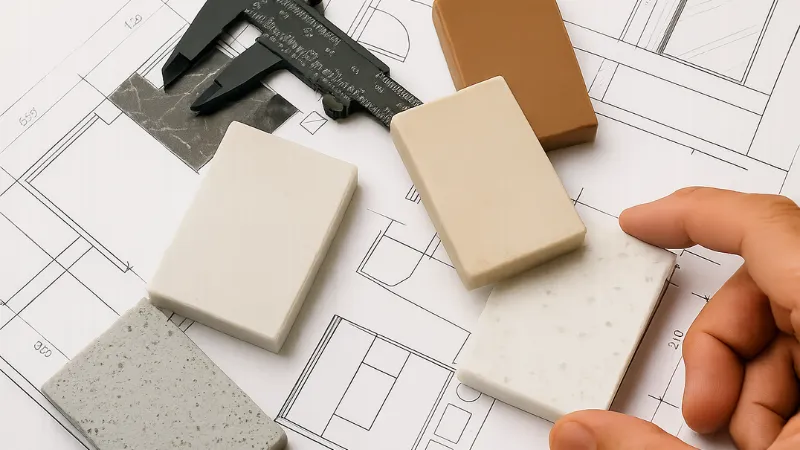
Marble is one of those materials that rarely needs an introduction. Walk into any well-designed home, hotel lobby, or premium commercial space in India, and chances are marble is doing the heavy lifting — on the floor, the walls, or across a kitchen counter. Yet despite its widespread use, choosing the right marble remains one of the most confusing decisions buyers face.
The problem isn't a lack of options. It's an overwhelming abundance of them. Hundreds of varieties, a dozen finish types, competing grades, and a sprawling supplier landscape — all with very little standardisation to help buyers navigate confidently. Add to that the practical concerns around maintenance, durability, and long-term cost, and what should be an exciting design decision quickly turns into a stressful one.
This guide cuts through the noise. Whether you're an interior designer specifying materials for a client, a builder sourcing in bulk, or a homeowner investing in a premium renovation, these tips will help you make a decision you won't regret five years from now.
No engineered surface fully replicates what marble does naturally. Each slab is geologically unique — the veining, the depth of colour, the way light plays across a polished surface. That individuality is precisely what makes it desirable.
Beyond aesthetics, marble carries a cultural weight in Indian interiors that goes back centuries. From Rajasthani palaces to contemporary penthouses in Mumbai, the material signals permanence, craftsmanship, and taste. For architects and designers, it remains one of the most versatile stones in their palette — capable of reading as warm or cool, minimal or ornate, depending entirely on how it's used.
That said, beauty alone is never enough justification for a material specification. The tips below are designed to help you move from instinct to informed decision.
India has a remarkably rich marble belt, with Rajasthan — particularly Kishangarh and Makrana — producing some of the finest white and coloured varieties available anywhere in the world. Makrana marble, used in the Taj Mahal, is still quarried and widely used in premium residential projects. Indian marbles like Rainforest Green, Katni, and Ambaji offer distinctive aesthetic profiles at competitive price points.
Imported marbles — Italian Carrara, Statuario, Calacatta, and Turkish varieties — command higher prices and are often specified for focal applications: feature walls, master bathroom floors, or statement countertops. Before defaulting to imported stone, evaluate whether an Indian variety achieves the same design intent at a fraction of the cost.
Marble is a natural material, and not all slabs from the same quarry are equal. Quality variation is real and significant. When evaluating a slab, look for:
Reputable suppliers will categorise their inventory by grade — usually A, B, and C — with Grade A being quarry-direct premium slabs with minimal defects. Always ask for grade documentation.
Marble behaves differently depending on where it's installed. Specifying the wrong type for the wrong application is one of the most common and costly mistakes.
Flooring: Use harder, denser varieties with low porosity. Rainforest Brown, Black Marquina, and polished Indian whites work well for high-traffic areas. Avoid very light or soft marbles in kitchens and entryways.
Walls and feature panels: This is where more dramatic, expressive marbles shine. Book-matched Calacatta or dramatic veined Italian varieties can be used here without the durability constraints of flooring.
Countertops: Marble countertops require careful material selection. White and light marbles are prone to etching from acidic substances (citrus, vinegar, wine). For kitchen counters, consider whether quartz or engineered stone is a more practical choice — or specify a harder marble with a honed finish, which conceals minor etching better than a high polish.
Marble is porous. That's not a dealbreaker, but it is a reality that needs to be designed around. Unsealed marble in a bathroom or kitchen will absorb water, oils, and staining agents over time.
The practical checklist:
The same slab looks and behaves quite differently depending on its finish:
The finish should be specified at the material selection stage, not left as an afterthought. Changing a finish after installation is expensive.
Marble is not always the most expensive option upfront, but it does require ongoing investment to maintain its appearance. A cheaper Grade C slab with poor structural integrity may crack or stain within two years, costing far more in replacement and rework than a quality Grade A specification.
When evaluating budget, consider the full lifecycle: material cost + fabrication + installation + sealing + periodic maintenance. On this basis, well-chosen marble from a reliable source often compares favourably with alternatives.
India's marble supply chain ranges from quarry owners and processors to importers, wholesalers, and fabricators. Navigating it without a framework is risky. Rather than relying on word-of-mouth alone, evaluate suppliers against these criteria:
Consistency of supply: Can the supplier guarantee the same batch, same shade, and same thickness across a large or multi-phase order? Batch variation is a serious problem on larger projects.
Quality documentation: Do they grade their stock? Can they provide slab traceability — quarry of origin, batch number, grade?
Finishing precision: Are cuts clean and dimensionally accurate? Does the polish or honing meet a consistent standard across the order?
Logistics capability: Can they deliver safely to site — properly crated, with adequate packaging — without damage? Do they have the infrastructure for pan-India delivery?
After-sales support: What's the process if a slab arrives damaged or there's a shortfall mid-project? Top marble companies in India distinguish themselves precisely on this dimension — their after-sales process is as important as their product.
To better understand how to evaluate reliable suppliers across these parameters, explore our detailed guide on Top Marble Manufacturer in India: A Complete Buyer's Guide.
Marble vs Quartz: Engineered quartz is non-porous, highly consistent, and requires minimal maintenance — making it a strong contender for kitchen countertops. Marble, however, offers natural depth and character that no engineered surface replicates. For bathrooms, walls, and prestige applications, marble typically wins on aesthetics; quartz wins on practicality for high-use surfaces.
Marble vs Granite: Granite is denser and harder than most marble, making it more resistant to scratching and staining. It's often the preferred choice for commercial kitchens and heavy-use flooring. Marble holds the advantage in elegance and design range, particularly for residential interiors where visual quality is prioritised.
Marble vs Terrazzo: Terrazzo — whether traditional poured-in-place or prefabricated — offers excellent durability and incredible design flexibility, particularly for large public spaces. Marble has the edge in luxury perception and individual character; terrazzo has the edge in seamlessness and longevity in institutional settings.
For architects, designers, and builders procuring marble at scale, the decision framework goes beyond individual slab selection:
These are the questions that separate a transactional supplier from a long-term procurement partner.
Choosing purely on aesthetics: A marble that photographs beautifully in a showroom may be entirely wrong for its intended application. Always evaluate fitness for purpose alongside visual appeal.
Ignoring maintenance implications: Not briefing clients on marble care leads to dissatisfied end users — and reflects on the specifier. Be honest about what a surface demands.
Not verifying supplier credibility: The Indian marble supply chain has reputable players and opportunistic ones. Buying on price alone, without evaluating quality systems and supply consistency, is a risk that tends to show up at the worst possible time.
Which marble is best for home interiors in India?
For general flooring, Indian varieties like Makrana White or Rainforest Brown offer excellent quality and value. For luxury applications or statement features, Italian Statuario or Calacatta are widely specified.
How do I identify good quality marble?
Look for surface consistency, uniform thickness, minimal structural defects, and clear grade documentation. Always view full slabs under natural light before approving.
Are imported marbles better than Indian marbles?
Not categorically. Indian marbles like Makrana White are world-class in quality. The right choice depends on the design brief, budget, and application — not the country of origin.
How often does marble need to be sealed?
Typically every 12–24 months for flooring and countertops, depending on foot traffic and use. A simple water-drop test (if water absorbs within a few minutes, resealing is due) is a useful field check.
Marble rewards those who approach it with knowledge and patience. The decisions you make at the specification stage — variety, grade, finish, supplier — determine whether the material performs as beautifully at year five as it did at installation.
The best outcomes consistently come from buyers who treat supplier evaluation with the same rigour they apply to material selection. In a market as large and varied as India's marble industry, that diligence is not optional — it's the difference between a project you're proud to showcase and one you'd rather not revisit.
Choose well, specify clearly, and partner with suppliers who can consistently deliver what they promise.
 20 September, 2026
 17 September, 2026
CNC Precision Cutting: How Technology Improves Edge & Inlay Work
 13 September, 2026
NSF & Food Safety Certifications: What They Mean for Quartz Surfaces
 12 September, 2026
 05 September, 2026
Marble in Temple & Religious Architecture: Tradition Meets Craft

Whatsapp Chatx
Hi! Click one of our representatives below to chat on WhatsApp or send us email to sales@paradigmquartz.in
 |
Contact Us +91 99440 00900 |
