
06
JUN
2026
The kitchen has quietly changed roles. Once tucked away as a purely functional workspace, it now sits at the heart of the home—open to living areas, hosting conversations, and shaping first impressions. As that shift has happened, the surfaces inside the kitchen have started carrying more weight, both visually and practically.
The countertop, in particular, has become a defining decision. It influences how a kitchen looks, how comfortable it is to work on, how much upkeep it demands, and how well the space holds its value over time. A countertop choice today is rarely just about color—it's about balancing daily performance with long-term design intent.
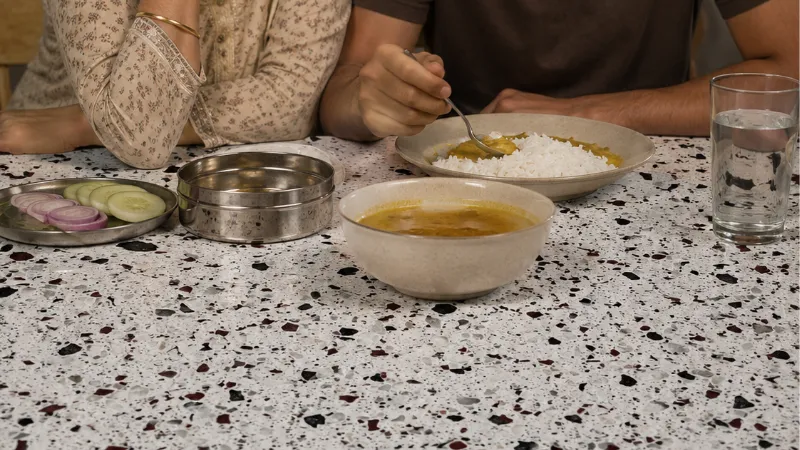
This is where terrazzo has re-entered the conversation. Long associated with grand floors and institutional architecture, terrazzo is increasingly being specified for contemporary kitchen countertops. Its blend of character, customizability, and resilience makes it a compelling option for homeowners and design professionals alike.
To understand terrazzo, it helps to look at how it's actually built. Terrazzo is a composite material—a mix of aggregate chips set into a binder, then ground and polished to a smooth surface.
The aggregate is what gives terrazzo its signature look. Marble chips are the most common, prized for their soft veining and natural depth, but the mix can also include granite, quartz fragments, glass, or mother-of-pearl. The size, density, and color of these chips dramatically change the final appearance.
The binder holds everything together. Cement-based binders produce a more matte, organic feel, while resin-based binders allow for tighter consistency, richer color saturation, and thinner slab profiles—often preferred for countertops.
What sets terrazzo apart is customization. Because it's a manufactured surface rather than a quarried one, nearly every element can be specified: the chip type, chip size, base color, and overall density. Few countertop materials offer this degree of creative control.
Most countertop materials ask you to choose from what nature or a factory already produced. Terrazzo flips that. The base color can be tuned to match a cabinetry palette, the aggregates selected to introduce contrast or harmony, and the chip distribution adjusted for a calm or energetic effect.
This makes bespoke design genuinely achievable. A designer working toward a specific mood—warm and earthy, cool and architectural, soft and neutral—can specify a terrazzo surface built to that brief rather than compromising around stock options.
Because terrazzo is composed rather than cut, no two surfaces are truly identical. The way chips settle and scatter gives each countertop a one-of-a-kind quality.
For kitchens designed to make a statement, this is a real advantage. A terrazzo island can anchor an entire room, drawing the eye without relying on bold color alone. Its texture reads as considered and contemporary—a surface that feels designed rather than selected.
A kitchen countertop endures constant use: chopping, hot pans, dropped utensils, spills, and scrubbing. Well-fabricated terrazzo, particularly with a marble or quartz aggregate and a quality binder, handles this daily wear capably.
The composite structure gives it solid impact tolerance, and its dense surface resists the everyday abrasion that dulls lesser materials. With proper sealing, it stands up well to the rhythm of a working kitchen.
Terrazzo has a long track record of lasting decades in high-traffic settings, and that resilience carries into the kitchen. When fabricated and installed correctly, a terrazzo countertop can remain attractive for many years with routine care.
To understand why terrazzo remains a preferred material for long-term performance, read Why Choose Marble Terrazzo for Long-Lasting Elegance?
Its lifecycle value comes from this combination of durability and timeless aesthetics—a surface that doesn't date quickly and doesn't need frequent replacement, which matters for both homeowners and the resale appeal of a property.
Minimalist kitchens benefit from terrazzo's quiet texture. A fine-chip, neutral surface adds subtle interest to clean lines without cluttering the look.
Contemporary homes suit terrazzo naturally, as its composed appearance aligns with modern, intentional design language.
Luxury interiors can lean into marble-aggregate terrazzo, where the soft veining of marble chips brings a refined, high-end depth.
Scandinavian-inspired spaces pair well with light bases and gentle aggregates, complementing the style's emphasis on warmth, simplicity, and natural materials.
Hospitality-inspired kitchens—those designed for entertaining and visual impact—gain from terrazzo's ability to act as a centerpiece while still performing under heavy use.
In each case, terrazzo works because it offers personality without sacrificing function, fitting the design philosophy rather than fighting it.
Chip size sets the entire tone. Fine aggregates create a smooth, almost uniform surface that reads as understated. Medium chips strike a balance—visible character without visual noise. Large-chip terrazzo is bold and sculptural, ideal for surfaces meant to be focal points.
Neutral palettes—soft whites, greys, and warm beiges—offer flexibility and longevity, pairing with almost any cabinetry. Bold statement colors turn the countertop into a design feature in its own right. Natural stone-inspired palettes mimic the look of quarried marble or granite while retaining terrazzo's customizability.
A polished finish brings out the depth and sheen of the aggregates, ideal for a sleek modern look. A honed finish offers a softer, matte surface with less glare and a more tactile feel. Contemporary edge designs—squared, mitered, or slim profiles—reinforce a clean, current aesthetic and influence how substantial the countertop appears.
Terrazzo rewards good planning. A few factors deserve attention before committing.
Fabrication quality is the single biggest variable. Terrazzo's beauty and durability depend on precise mixing, curing, and finishing. A skilled fabricator delivers consistent color and a flawless surface; a poor one delivers neither.
Installation requirements matter because terrazzo slabs are heavy and require proper support and level cabinetry. This is not a DIY material.
Surface thickness affects both durability and appearance—thicker slabs feel more substantial and resist stress, while thinner resin-based options suit minimalist designs.
Kitchen usage patterns should guide the choice. A heavily used family kitchen has different demands than a show kitchen, and the binder, sealing, and finish should be selected accordingly.
Professional installation isn't optional here—it's what protects the investment.
Terrazzo is practical to live with, provided expectations are realistic.
Daily cleaning is simple: warm water and a pH-neutral cleaner. Harsh acidic or abrasive products should be avoided, as they can dull the surface or damage the binder over time.
Spill management is straightforward but time-sensitive. Wiping up wine, citrus, oil, and other staining agents promptly keeps the surface looking its best, especially with marble-based aggregates.
Surface protection comes largely from sealing. A properly sealed terrazzo countertop resists moisture and staining; resealing periodically maintains that defense.
Long-term upkeep is minimal. Occasional resealing and gentle daily care are usually enough to keep terrazzo performing for years.
Choosing patterns without considering kitchen size. A large-chip, high-contrast design can overwhelm a compact kitchen. Scale should match the space.
Ignoring maintenance requirements. Buyers sometimes assume terrazzo is entirely hands-off. It's low-maintenance, not no-maintenance, and sealing matters.
Selecting suppliers based only on price. The cheapest quote often reflects lower-grade binders, inconsistent aggregates, or weaker fabrication—costs that surface later.
Overlooking fabrication quality. Two terrazzo countertops at the same price point can differ enormously in finish and longevity depending on who made them.
For architects, builders, and distributors, the supplier relationship is as important as the material itself.
Material consistency is paramount—when a project spans multiple slabs or phases, color and aggregate uniformity must hold across batches.
Color matching capability allows a supplier to meet exact design specifications rather than offering close approximations.
Custom fabrication support signals a partner who can execute bespoke briefs, edge profiles, and dimensions rather than just stock formats.
Project-scale supply reliability ensures volume, lead times, and delivery commitments hold up on large or time-sensitive builds.
Technical expertise ties it together—a supplier who understands binders, sealing, installation, and performance is one who helps prevent costly mistakes.
These are the markers that separate a genuine surfacing partner from a simple vendor.
Are terrazzo countertops durable? Yes. When fabricated with quality aggregates and binders and properly sealed, terrazzo handles daily kitchen use, impact, and abrasion well, with a long track record of durability in high-traffic environments.
Do terrazzo countertops stain easily? Not when sealed correctly. The main risk comes from acidic or oily spills left sitting, particularly on marble-based aggregates. Prompt cleanup and periodic resealing keep staining minimal.
Are terrazzo countertops suitable for busy kitchens? They are, provided the binder, thickness, and finish are chosen for heavy use and installation is professional. A well-specified terrazzo surface performs reliably in active family kitchens.
How long do terrazzo countertops last? With correct fabrication, installation, and routine care, terrazzo countertops can remain attractive and functional for decades.
Terrazzo countertops are far more than a passing design trend. They represent a meeting point between creative freedom and dependable performance—a surface that can be tailored to a precise design vision while standing up to the realities of daily kitchen life.
Their value lies in the details: thoughtful design choices, quality fabrication, professional installation, and realistic maintenance. Get those right, and terrazzo delivers a customizable design solution, a durable working surface, and a long-term investment that holds both its beauty and its worth.
For homeowners and professionals who want a kitchen surface with genuine character and lasting substance, terrazzo—sourced and fabricated correctly—is a choice that rewards the consideration it asks for
 17 September, 2026
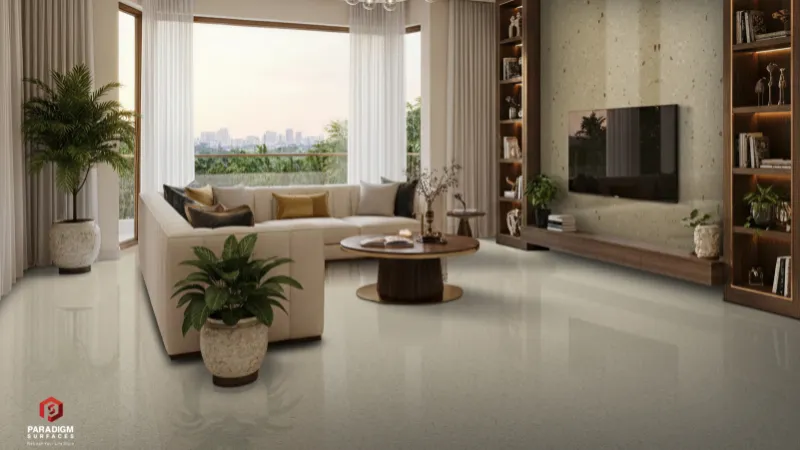
CNC Precision Cutting: How Technology Improves Edge & Inlay Work
 13 September, 2026
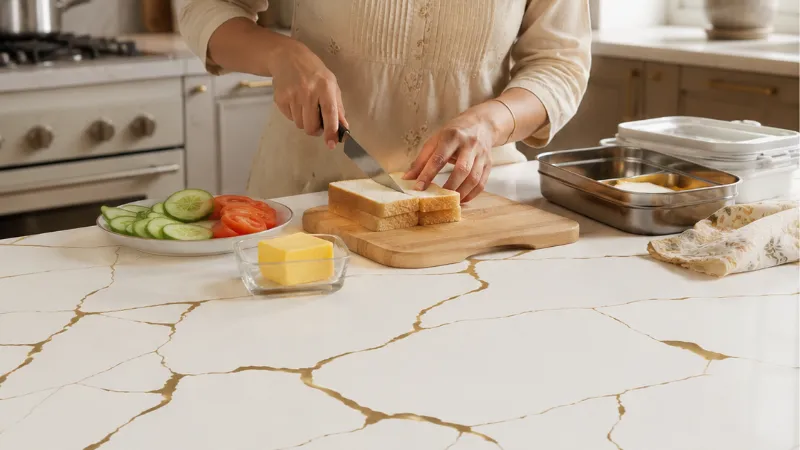
NSF & Food Safety Certifications: What They Mean for Quartz Surfaces
 12 September, 2026
 05 September, 2026
Marble in Temple & Religious Architecture: Tradition Meets Craft
 02 September, 2026
Super Jumbo Quartz Slabs for Five-Star Hotel Lobbies & Reception Counters

Whatsapp Chatx
Hi! Click one of our representatives below to chat on WhatsApp or send us email to sales@paradigmquartz.in
 |
Contact Us +91 99440 00900 |
