20
MAR
2026
The kitchen has evolved from a purely functional space into the most design-conscious room in any home or commercial property. Clients — whether they're homeowners, developers, or hospitality brands — now expect kitchen platforms that perform as well as they look. That's exactly where quartz has stepped in and redefined the standard.
Quartz stone for kitchen platform applications has seen a consistent surge in demand across India and globally, and for good reason. It combines the visual richness of natural stone with engineering-grade performance. For architects, interior designers, and material distributors, understanding how to leverage quartz effectively is now a core professional competency.
Why Quartz Is the Right Choice for Modern Kitchen Platforms
Before diving into design ideas, it's worth understanding why quartz outperforms alternatives in kitchen environments — not just on paper, but on actual job sites and in real homes.
Engineered quartz surfaces are composed of roughly 90–95% natural quartz crystals bound with polymer resins. This manufacturing process results in a surface significantly harder than most natural stones. Unlike marble, which scratches and etches with acidic foods, or granite, which requires periodic sealing, quartz holds its surface integrity without special treatment.
For kitchen manufacturers and builders sourcing durable kitchen surfaces at scale, this translates into fewer post-installation complaints and lower long-term warranty risk.
Bacteria, oil, and moisture can seep into the microscopic pores of granite and marble. Quartz, being non-porous, doesn't allow this. From a hygiene standpoint — critical in residential kitchens, commercial spaces, and hospitality projects — this is a meaningful functional advantage.
Stain resistant quartz surfaces need nothing more than a mild soap and damp cloth. There's no resealing, no special cleaners, no seasonal maintenance. For premium kitchen design materials at the luxury segment, this matters because high-end clients don't want upkeep instructions — they want performance.
|
Feature |
Quartz |
Granite |
Marble |
|
Porosity |
Non-porous |
Requires sealing |
Porous |
|
Scratch resistance |
High |
High |
Moderate |
|
Stain resistance |
Excellent |
Moderate |
Low |
|
Maintenance |
Minimal |
Annual sealing |
Regular care |
|
Color consistency |
High (engineered) |
Variable |
Variable |
|
Heat resistance |
Moderate |
High |
Moderate |
The takeaway: quartz wins on maintenance and consistency. Granite edges it on heat resistance. Marble leads on aesthetics for those willing to accept the upkeep. For most modern kitchen platform applications, quartz is the practical default.
8 Stylish Quartz Countertop Ideas for Modern Kitchens
Best for: Urban apartments, small kitchens, Scandinavian-style interiors
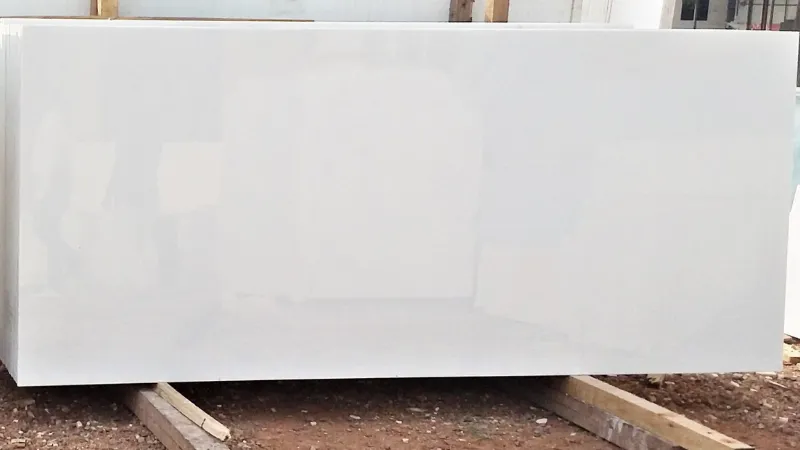
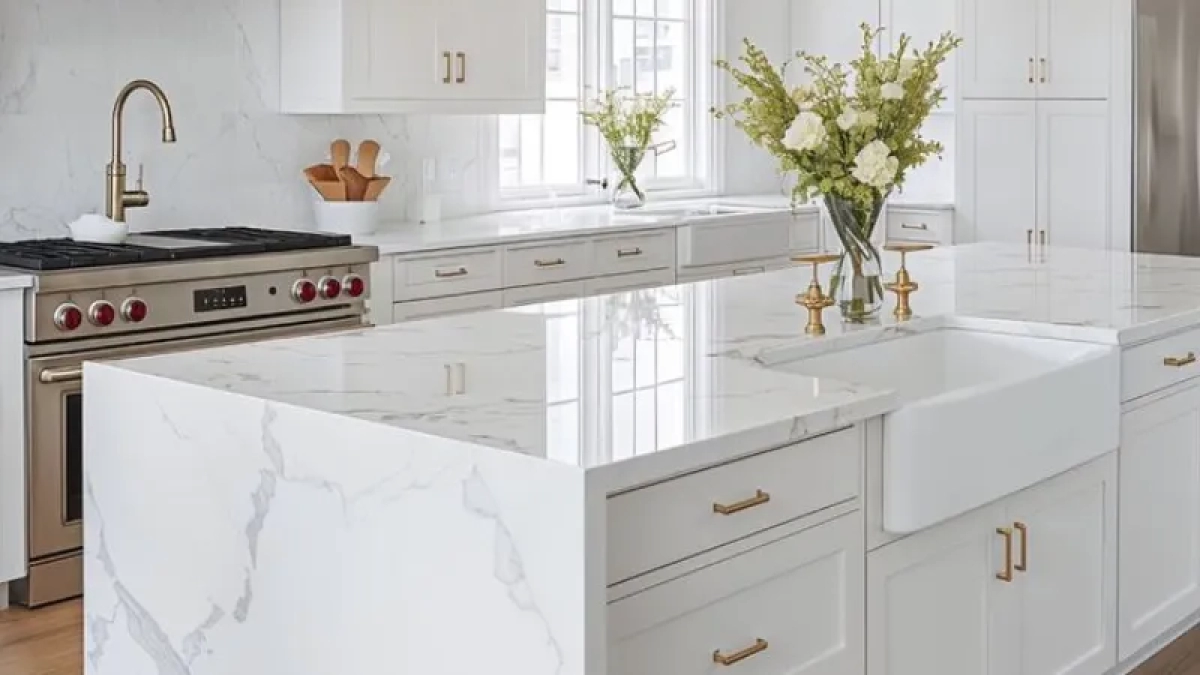
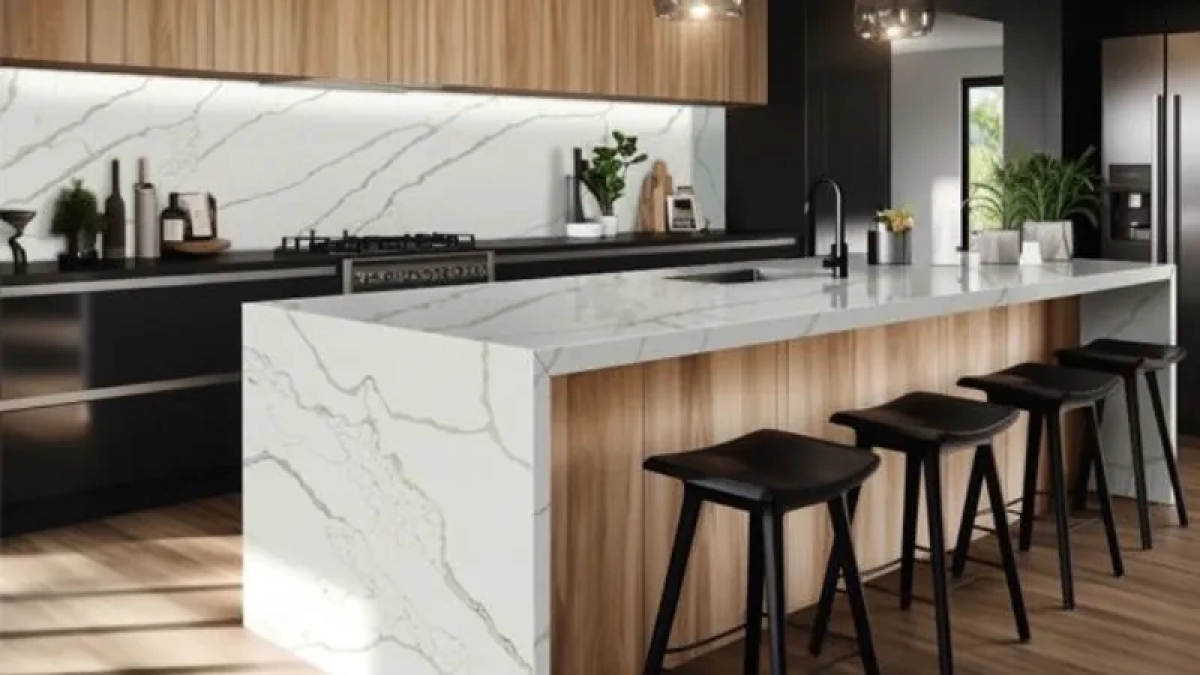
Pure white quartz with a light grain or very faint vein structure is one of the most requested finishes in modern kitchen design. The finish is typically polished, which keeps the surface reflective and helps smaller kitchens feel more open.
The practical benefit is obvious — white surfaces show dirt, yes, but stain resistant quartz means that a quick wipe restores it fully. For kitchen manufacturers producing modular units in neutral palettes, this is a safe and commercially strong option.
Who should specify this: Interior designers working with compact urban spaces; builders creating spec homes where broad market appeal is the goal.
Best for: Luxury villas, open-plan living kitchens, high-end residential projects
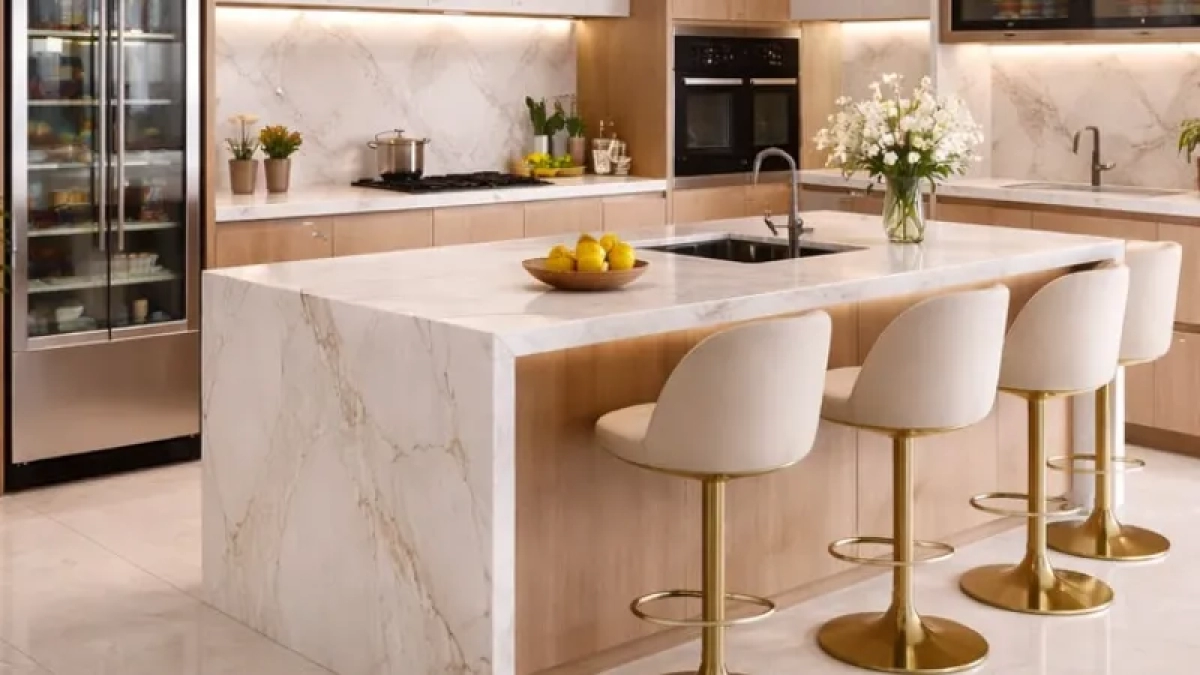
Engineered quartz surfaces now replicate the bold grey or gold veining of Italian Calacatta marble with far greater colour consistency and zero porosity. The visual result is striking — the kind of centrepiece countertop that defines a room.
Unlike actual Calacatta marble, veined quartz for kitchen platform use doesn't require any chemical sealing and resists wine, lemon juice, and oil without staining. The slab-to-slab colour match is also predictable, which matters enormously on larger projects where multiple slabs are needed.
Who should specify this: Architects designing premium residential kitchens; interior designers who want the luxury marble aesthetic without the maintenance trade-offs.
Best for: Industrial kitchens, contemporary homes, commercial restaurant spaces
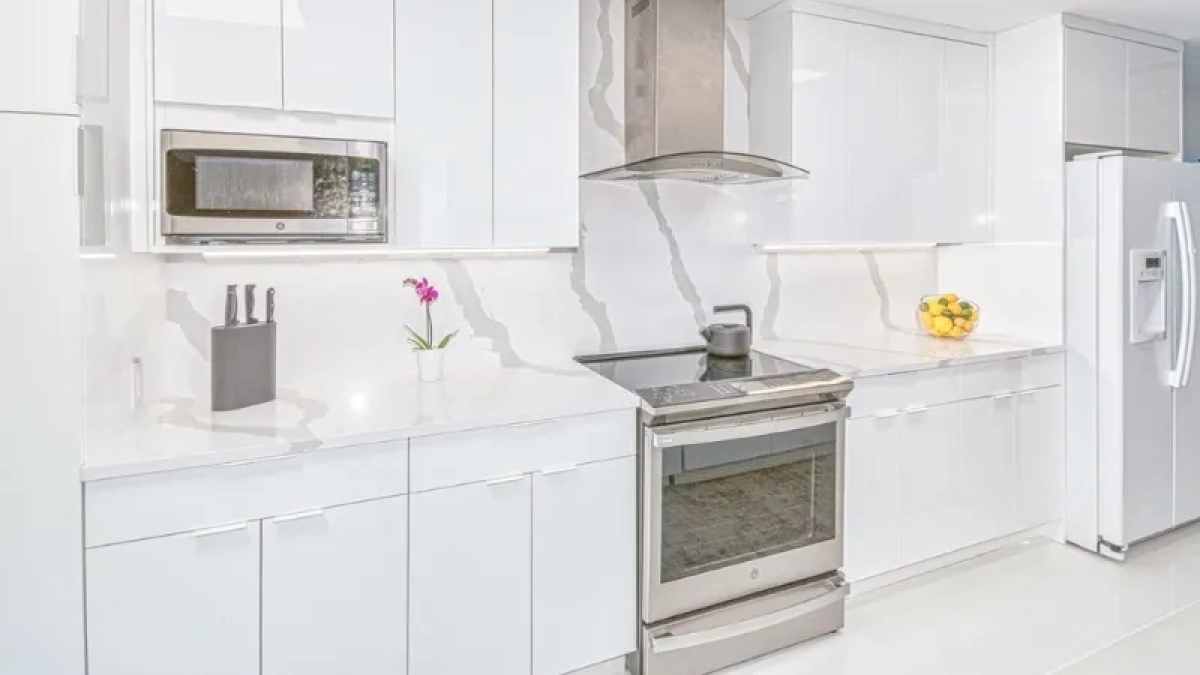
Matte-finish grey quartz captures the raw aesthetic of concrete without any of the porosity or maintenance demands actual concrete surfaces require. The non-reflective finish is particularly effective under pendant lighting — it absorbs light rather than bouncing it, creating a grounded, sophisticated visual weight.
This is one of the stronger kitchen platform design ideas for hospitality and food service environments, where surfaces need to look intentional and perform under heavy use simultaneously.
Who should specify this: Designers working on hospitality and F&B projects; developers targeting young professional buyers who favour industrial-chic aesthetics.
Best for: Traditional homes, earthy interiors, Mediterranean or Japandi-style kitchens
Not every modern kitchen trends dark or cool. Warm beige and cream quartz with soft movement brings an organic, calming quality to kitchen platforms — particularly effective when paired with warm wood cabinetry or terracotta tile floors.
This palette has seen strong commercial growth in villa and premium housing projects where clients want a kitchen that feels welcoming rather than clinical.
Who should specify this: Interior designers working on residential projects with a warm, natural material palette; real estate developers building in lifestyle-driven formats.
Best for: High-contrast kitchens, statement interiors, showroom displays
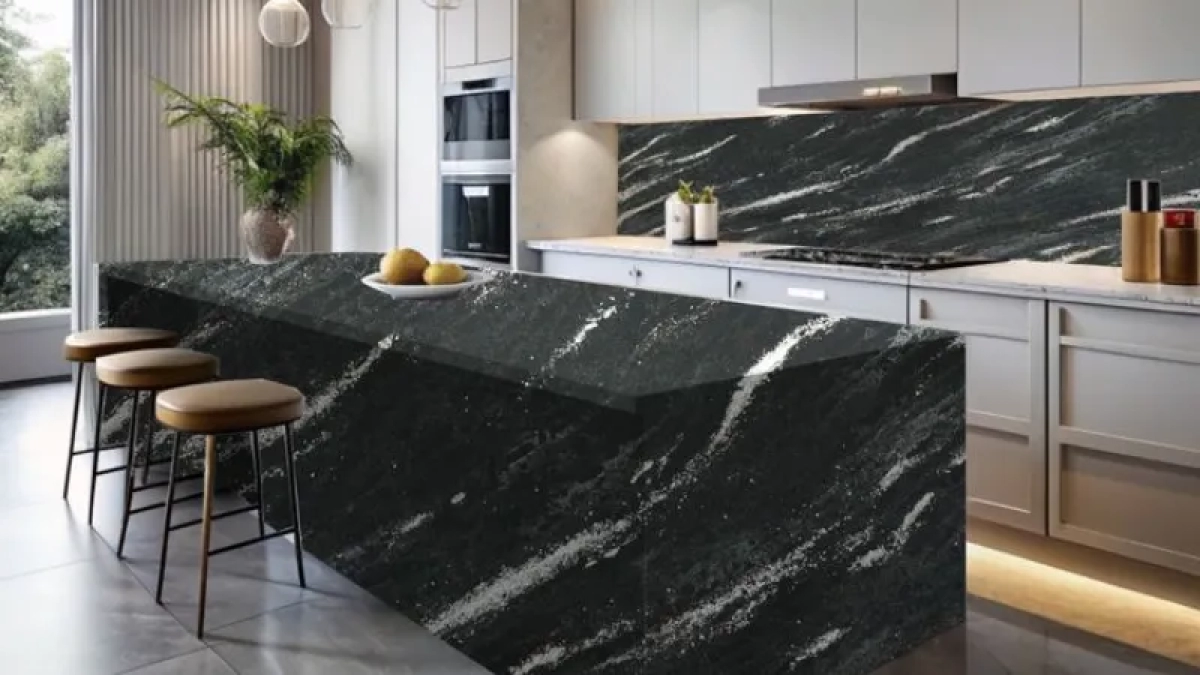
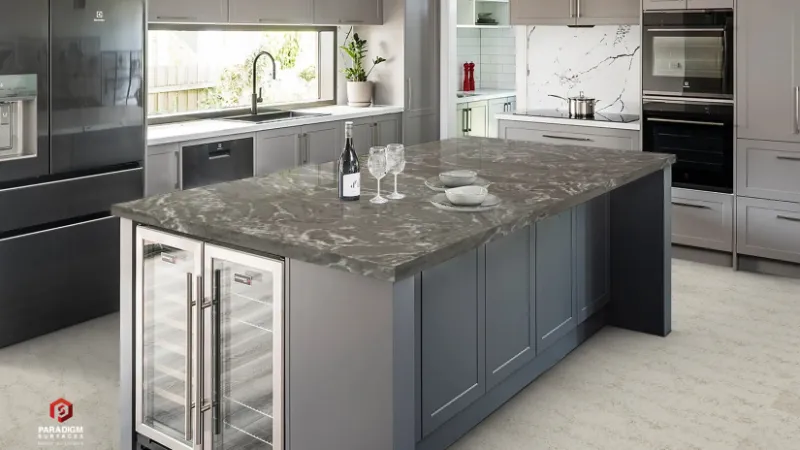
Deep charcoal or jet black quartz makes a strong visual statement and pairs particularly well with white cabinetry, brass fixtures, or natural wood. Polished black quartz amplifies light and creates depth; honed black delivers a more contemporary, understated effect.
From a performance standpoint, darker quartz shows water marks and light dust more readily than lighter tones — worth communicating clearly to clients. That said, for projects where drama is the brief, nothing quite matches it.
Who should specify this: Designers on showroom, high-end residential, or hospitality projects where visual impact is the primary driver.
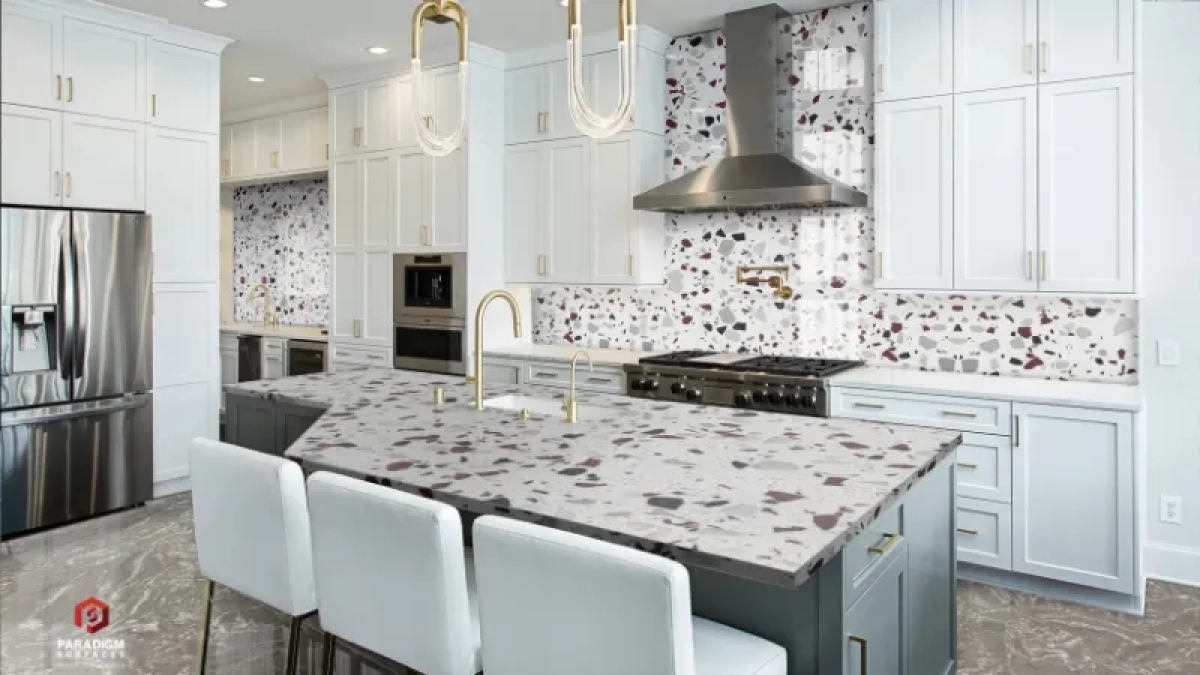
Best for: Contemporary apartments, boutique hotels, retail-adjacent kitchen displays
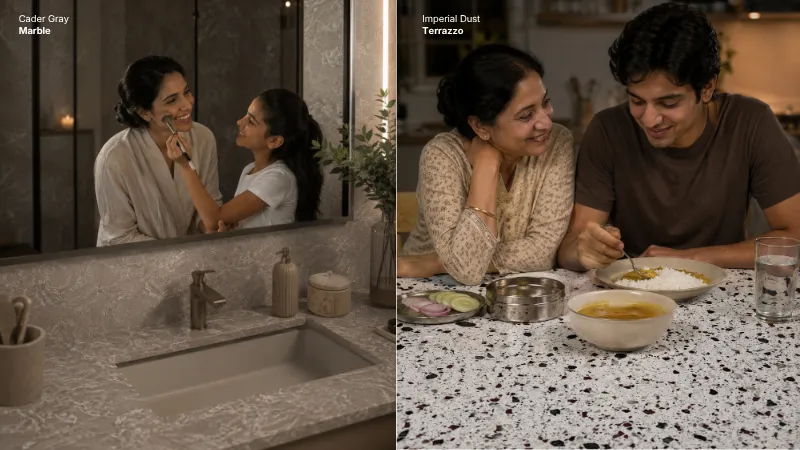
A newer category gaining traction: quartz surfaces that incorporate the speckled, aggregate-rich aesthetic of traditional terrazzo. Available in white, grey, or blush base tones with contrasting chips, this finish works beautifully as a kitchen platform in spaces that lean eclectic or creative.
Unlike traditional terrazzo, these engineered quartz surfaces require no grinding, polishing, or sealing post-installation. They arrive ready to install with consistent pattern distribution — a significant advantage on larger projects.
Who should specify this: Architects and designers working on boutique hospitality, creative workplaces with kitchen zones, or contemporary apartments targeting design-forward buyers.
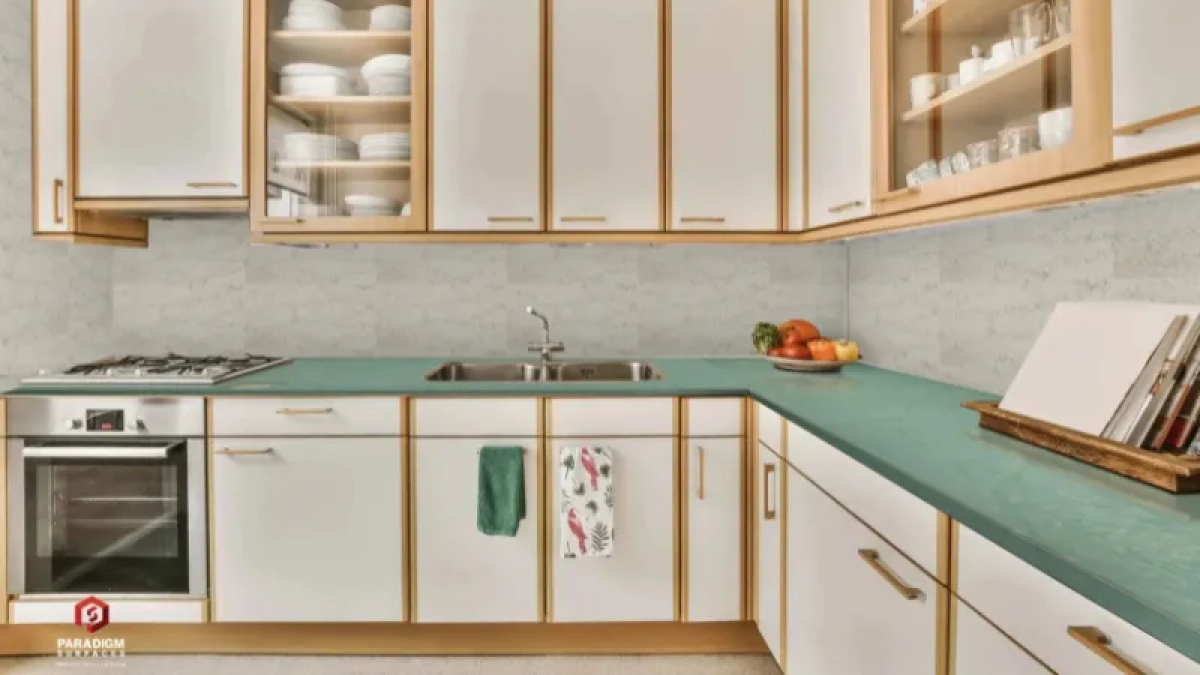
Best for: Coastal homes, wellness-oriented spaces, accent island platforms
Sage green, dusty teal, and muted blue quartz have moved from niche to mainstream in premium kitchen design over the last two years. Often used as a kitchen island platform with a contrasting perimeter, these tones create a layered, curated look that photographs exceptionally well — important for real estate marketing.
These colours work best in spaces with natural light and are most effective when the cabinetry is kept neutral (white, off-white, or natural wood).
Who should specify this: Interior designers creating lifestyle-focused residential projects; developers marketing to wellness-conscious or coastal lifestyle buyers.
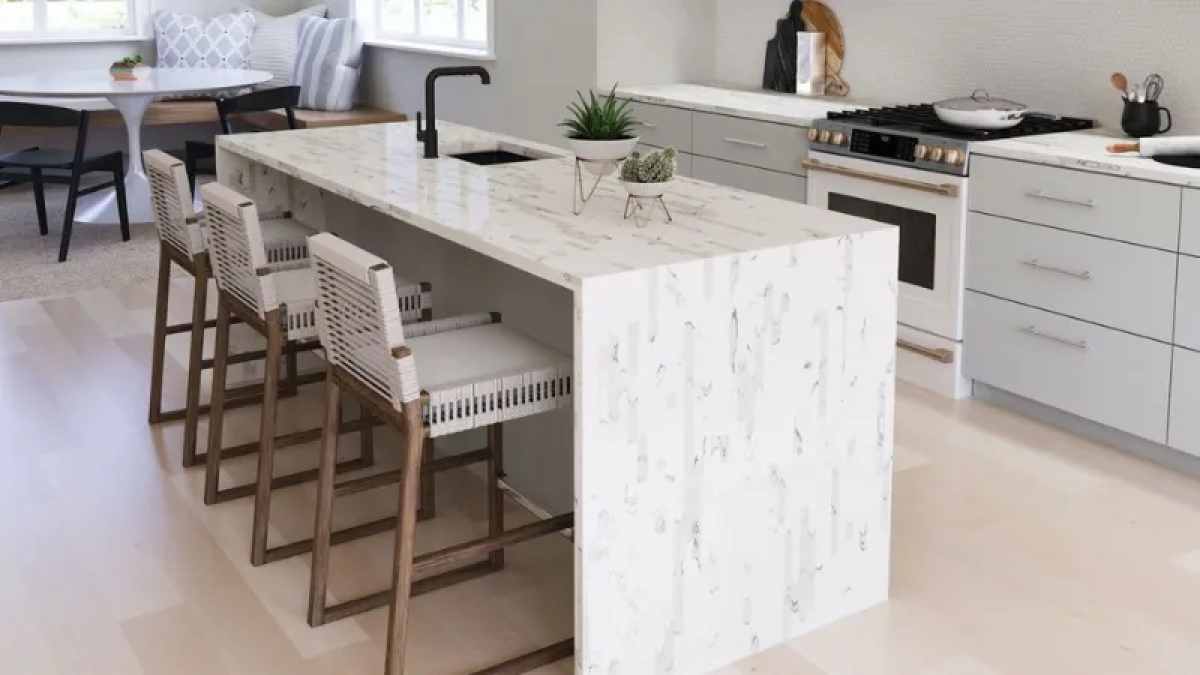
Best for: Ultra-premium kitchens, large open-plan platforms, design feature kitchens
Book-matching — mirroring two adjacent slabs so their veining creates a symmetrical pattern — is typically associated with marble. Quartz manufacturers now offer this configuration in their premium veined ranges, allowing a genuinely architectural countertop detail without the fragility of natural stone.
This application typically demands larger format slabs and precise fabrication, making it a specification that requires close coordination between the designer, fabricator, and stone supplier.
Who should specify this: Architects and interior designers working at the ultra-premium residential tier; developers differentiating a flagship project.
Design appeal is only part of the decision. Here's how to match quartz specification to actual project parameters:
Natural-light-rich kitchens can handle darker, richer quartz tones. North-facing or artificially lit kitchens need lighter, more reflective surfaces to avoid feeling closed in.
Heavy-cooking environments (commercial kitchens, large family homes) need quartz specified for thickness — 20mm minimum, with 30mm preferred for island platforms that take the most impact. Heat resistant kitchen slabs matter here: avoid placing hot pans directly on any quartz surface, and specify trivets as a standard recommendation to clients.
Aesthetic-primary kitchens (show homes, hospitality displays, showrooms) can prioritise visual drama over thickness.
At the procurement level, quartz pricing varies significantly based on:
For large-volume projects, working directly with a supplier who can guarantee batch consistency is essential. Two slabs from different production runs can differ subtly in tone — acceptable in some applications, problematic in others.
Even experienced professionals make these errors when specifying quartz for kitchen platforms:
1. Choosing based on small samples alone. A 10cm sample chip never tells the full story. Always request a full slab view — patterns, veining, and tone shift significantly at scale.
2. Ignoring edge profiles. The edge detail affects the entire character of a kitchen platform. A waterfall edge on a dark quartz island reads very differently from the same material with a simple eased edge. Edge profiles should be part of the design conversation early, not an afterthought at fabrication stage.
3. Underspecifying thickness. 12mm quartz is appropriate for wall cladding or light-duty applications. Kitchen platforms should start at 20mm; islands and heavily used surfaces at 30mm. This is a cost-per-unit decision that significantly affects longevity.
4. Overlooking the importance of supplier consistency. For multi-slab projects or repeat orders, colour and texture consistency matters as much as the initial quality. Distributors and designers should verify that their supplier can match future orders to the same specification.
The quality of the stone is only one part of the equation. For professionals sourcing quartz at volume — whether for a single large project or ongoing distribution — the supplier relationship shapes the entire procurement experience.
A reliable quartz supplier brings:
The most effective supplier partnerships in this space aren't transactional — they're collaborative. Suppliers who understand how architects and designers work can offer material advice, sample support, and project-stage coordination that adds genuine value beyond the product itself.
Quartz has earned its place as the default choice for modern kitchen platforms — not through marketing, but through genuine performance. It's durable, hygienic, visually versatile, and low maintenance in ways that matter to the people who actually live and work in these kitchens.
For professionals specifying, sourcing, or distributing kitchen surface materials, the decisions that count most are the ones made before fabrication: the right finish for the light conditions, the right thickness for the use case, the right supplier for the project scale.
Quartz isn't just a surface material. Chosen well, it's a long-term investment in a kitchen that performs without demanding attention — and that's exactly what modern clients expect.
Q: Is quartz stone suitable for outdoor kitchen platforms?
Standard engineered quartz is not recommended for direct outdoor use — prolonged UV exposure can cause colour fading and surface degradation. Specific UV-stable grades exist for semi-covered outdoor applications; always check the manufacturer's specification before outdoor specification.
Q: How does quartz compare to granite for kitchen platforms in terms of long-term cost?
Granite typically has a lower initial cost but requires periodic sealing (every 1–2 years) and is more vulnerable to staining without maintenance. Quartz has a higher upfront cost in many ranges but zero ongoing maintenance requirements, making the total cost of ownership competitive over a 10+ year period.
Q: What thickness of quartz should I specify for a kitchen platform?
For standard perimeter counters: 20mm. For island platforms and heavily used surfaces: 30mm. For purely decorative or display applications: 12mm is acceptable. Always confirm thickness options with your supplier before design finalisation.
Q: Can quartz be used for both the kitchen platform and backsplash?
Yes — full-height quartz backsplashes are increasingly common in premium kitchens and create a seamless, continuous material story. Coordinating slab selection between the horizontal platform and vertical backsplash requires careful planning to ensure grain/pattern alignment. Discuss this with your fabricator early in the process.
 30 August, 2026
Stone Surfaces for QSRs & Restaurants: Durability Meets Design
 27 August, 2026
Terrazzo Thickness & Substrate Guide: Choosing the Right Base
 21 August, 2026
Transporting & Handling Jumbo Quartz Slabs: Logistics Explained

Whatsapp Chatx
Hi! Click one of our representatives below to chat on WhatsApp or send us email to sales@paradigmquartz.in
 |
Contact Us +91 99440 00900 |