
15
JUN
2026
Choosing the right marble for a project is rarely just a procurement decision. It shapes how a space feels, how long it holds up, and how manageable the project becomes — from sourcing to final installation. And yet, when most buyers sit down to evaluate their options, the conversation quickly collapses into a shorthand: Italian marble is premium, Indian marble is economical.
That framing misses most of what actually matters.
This article breaks down the real differences between Italian and Indian marble — the ones that affect project outcomes, not just price tags. Whether you're speccing a luxury residence, managing a large hospitality build, or advising clients on long-term maintenance, the right choice is always project-specific. Origin is only one piece of the picture.
Italian marble is quarried primarily in regions like Carrara, Botticino, and Brescia. These deposits formed over millions of years under specific geological conditions — metamorphic limestone subjected to intense heat and pressure — which gives Italian marble its signature density, crystalline structure, and refined veining.
Visually, Italian marble tends toward white, grey, and beige tones with elegant, often dramatic veining. Varieties like Statuario, Calacatta, and Botticino Classico are globally recognised in luxury architecture and hospitality design. They're frequently specified for flooring in high-end lobbies, statement wall cladding, and bespoke furniture.
Italian marble carries strong aspirational weight in design markets, which influences buyer perception as much as it does the actual material properties.
India is one of the world's largest marble-producing countries, with major quarrying concentrated in Rajasthan — particularly around Makrana, Kishangarh, and Udaipur. The geological diversity of these regions produces an exceptionally wide variety of marble: whites, greens, blacks, browns, pinks, and heavily veined exotics.
Makrana marble, the same material used in the Taj Mahal, is a benchmark for Indian white marble quality. Beyond it, Indian quarries supply a substantial share of the global marble market — including raw slabs that are processed, polished, and re-exported to international buyers.
Availability is a genuine strength: Indian marble is accessible at scale, across a wide range of specifications, with far shorter lead times than most imported stone.
Italian marble typically delivers a more uniform visual language: consistent backgrounds, controlled veining, and a palette that has been widely adopted in European and Middle Eastern luxury interiors. This visual predictability is useful when a design requires cohesion across large areas.
Indian marble offers considerably more variation — both within a variety and between varieties. That variation can be a design asset when handled well, allowing for distinctive, one-of-a-kind aesthetics. It can also be a challenge on projects requiring strict batch matching across hundreds of square metres.
Neither is inherently superior. Projects driven by editorial clarity often benefit from Italian marble's consistency. Projects that want character, warmth, or regional distinctiveness often find that Indian marble delivers it more affordably and with shorter lead times.
This is where Italian and Indian marble diverge most practically for large-scale buyers.
Italian marble operates within a global supply chain with fixed quarry outputs. Lead times can stretch from 8 to 20 weeks depending on variety, cut specification, and shipping logistics. For projects with tight timelines, this creates real planning risk — especially if initial quantities need to be reordered.
Indian marble, by contrast, is domestically available at scale. Manufacturers and processors operating in Rajasthan can supply large quantities within much shorter windows, with the ability to hold consistent inventory for ongoing project phases. For developers and contractors managing phased delivery schedules, this operational advantage is significant.
Italian marble slabs — particularly white varieties — require careful handling on site. They can be more susceptible to staining during installation if grouting or sealing protocols aren't followed precisely. Matching across large floor areas requires slab selection and pre-laying review, which adds both time and skill requirements.
Indian marble fabrication has matured significantly. Processors in Kishangarh and Udaipur now operate precision CNC and water jet equipment comparable to European standards. For large commercial or residential projects, the fabrication ecosystem around Indian marble — cutters, polishers, installers — is far more accessible within India, reducing project risk.
All natural marble requires maintenance. The relevant question for any project is what level of maintenance the end-user can realistically sustain.
Italian white marbles, particularly Calacatta and Statuario, are highly porous and prone to etching from acidic substances. In hospitality or kitchen applications, this means rigorous sealing schedules and user protocols — manageable in high-end environments with dedicated housekeeping, but impractical in others.
Many Indian marble varieties — particularly darker stones and harder Rajasthani granites — offer better resistance to surface etching. Harder Indian marbles can be better suited to high-traffic commercial applications where maintenance frequency is a real constraint.
Both Italian and Indian marble hold their value well when sourced and installed correctly. The long-term calculus goes beyond resale: it includes replacement cost, replenishment availability, and how well the stone ages in its specific environment.
Italian marble in well-maintained residential or hospitality settings ages beautifully and retains its design relevance for decades. Indian marble used in the right applications — large-format flooring, feature walls, public spaces — performs with equal longevity.
The risk in both cases comes from mismatched specification: using a high-maintenance Italian white in a high-traffic commercial corridor, or specifying a low-grade Indian slab where structural integrity is critical.
Italian marble remains the default specification for ultra-premium residential projects where perceived luxury and design pedigree are part of the value proposition. For clients purchasing at the top of the market, the origin carries meaning. That said, premium Indian marble — particularly first-grade Makrana white or high-polish Indian statuario — is increasingly specified in luxury residential projects, especially where budget allocation or timeline discipline is a factor.
For mid-to-premium residential developments, Indian marble delivers the best combination of visual quality, cost efficiency, and supply reliability. Developers managing multi-unit projects benefit from consistent Indian marble inventory and the ability to reorder without the delays associated with imported stone.
Hotels, resorts, and commercial hospitality spaces prioritise supply consistency, batch matching, and durability. Large hospitality projects often specify Indian marble for primary flooring and Italian marble selectively — for lobby focal points, suite bathrooms, or feature walls — balancing impact with cost management.
Offices, retail, and public buildings favour durability and maintenance simplicity. Indian marble and Indian granite perform reliably in these applications, with adequate polish retention under heavy foot traffic and far more practical resourcing.
For manufacturers and distributors supplying international buyers, Indian marble represents a genuine competitive advantage. India's processing infrastructure, combined with the diversity of available stone, allows suppliers to offer customised solutions — finishes, formats, thicknesses — at globally competitive pricing with reliable turnaround.
Origin is a starting point, not a quality guarantee.
Italian marble varies significantly across quarries and extraction zones. A poorly processed Carrara slab can underperform a precision-cut Rajasthani white marble piece at a fraction of the cost. The variables that determine real-world quality are quarry grade, extraction technique, processing standards, surface finishing, and slab consistency.
For buyers evaluating a supplier, the right questions are about manufacturing process: What polishing standards do they apply? What thickness tolerances do they maintain? How do they handle slab-to-slab consistency within a batch? Is there third-party quality certification?
A manufacturer who can answer these questions with specificity and evidence — not just with marketing language about Italian provenance or Indian heritage — is the supplier worth working with.
To better understand how to evaluate suppliers and manufacturers, explore How to Choose the Right Marble Manufacturer in India for Your Project.
When architects, developers, and procurement managers assess marble suppliers at scale, they look well beyond catalogue variety and pricing.
The most important criteria include production capacity — can the supplier meet your volume requirements within your timeline? — and inventory depth, which determines whether reorders can be fulfilled from the same batch or with acceptable consistency.
Quality control systems matter more than claimed certifications. A reliable marble manufacturer in India will have documented QC processes, consistent surface finishing standards, and clear protocols for handling complaints or replacements. Project support — technical guidance on specification, installation documentation, and post-order follow-through — distinguishes professional suppliers from commodity traders.
Logistics capability is equally important for large commercial projects. Suppliers who can coordinate delivery phasing, manage packing for fragile material, and provide documentation for customs or specification records reduce project risk considerably.
Choosing on origin alone. The Italian vs Indian debate often ends with a decision based on reputation rather than fit. The right marble is the one that performs best for the specific application — not the one with the more prestigious address.
Ignoring maintenance realities. Specifying a high-maintenance marble in a project without the infrastructure to care for it is a recurring error, particularly in commercial and hospitality contexts. Always match marble selection to the maintenance environment.
Evaluating only initial cost. Total cost of ownership includes installation complexity, ongoing maintenance, and potential replacement cost. A lower-cost slab that requires frequent resealing or is difficult to batch-match on reorder can cost more over the project life.
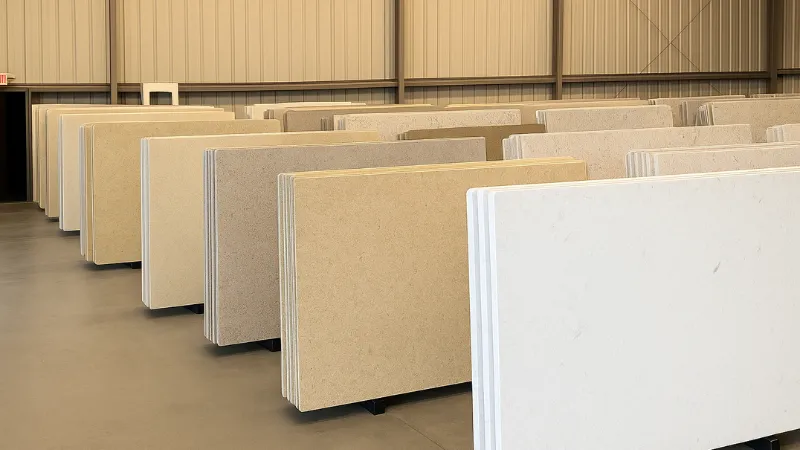
Not reviewing actual slabs. Catalogue images and samples communicate colour but rarely capture the full variation present in a large slab batch. Always review representative full-size slabs — ideally from the specific production batch — before committing to large orders.
At commercial and hospitality scale, the margin for supply disruption is narrow. The factors that matter most to large project buyers are:
These are operational requirements that matter more to a project's success than whether the stone was quarried in Carrara or Rajasthan.
Is Italian marble better than Indian marble?
Not categorically. Italian marble has a well-established design heritage and visual distinctiveness that suits certain luxury applications. Indian marble offers comparable quality in many varieties, with significant advantages in availability, lead time, and cost for large-scale projects. The better marble is the one matched correctly to the project.
Which marble lasts longer?
Longevity depends more on installation quality, surface finishing, sealing, and maintenance than on origin. Both Italian and Indian marble last for decades when correctly specified and maintained. Harder Indian marble varieties can outperform Italian white marble in high-traffic applications.
Which marble is easier to maintain?
Generally, harder marble varieties — many of which are Indian — are less susceptible to etching and surface damage. Italian white marbles require more rigorous maintenance protocols. Match the marble to the maintenance reality of the end environment.
How do I choose a reliable marble supplier?
Evaluate suppliers on production capacity, quality control documentation, inventory consistency, and project support — not just price or origin claims. Ask to review actual slabs from current inventory and request references from comparable project types.
There is no universal answer to the Italian vs Indian marble question. The best marble for any project is the one that aligns with the design intent, performs reliably in the application environment, can be sourced at the required scale within the project timeline, and can be maintained realistically over its service life.
Italian marble brings a refined visual identity and global design recognition that remains relevant in specific luxury contexts. Indian marble brings variety, scale, processing quality, and supply flexibility that makes it the practical and aesthetic choice for a far wider range of applications.
The decision framework should always start with the project — not the origin. Work with suppliers who understand that distinction, and who can demonstrate the manufacturing standards to back it up

 24 September, 2026
Festive Home Makeovers: Refreshing Kitchens & Interiors with Stone
 20 September, 2026
 17 September, 2026
CNC Precision Cutting: How Technology Improves Edge & Inlay Work
 13 September, 2026
NSF & Food Safety Certifications: What They Mean for Quartz Surfaces
 12 September, 2026
Whatsapp Chatx
Hi! Click one of our representatives below to chat on WhatsApp or send us email to sales@paradigmquartz.in
 |
Contact Us +91 99440 00900 |