
09
AUG
2026
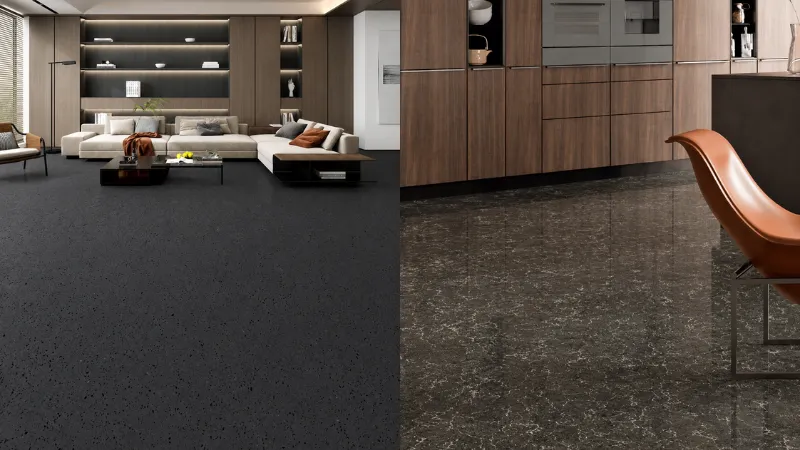
Matte and polished quartz offer different looks and everyday experiences. Polished quartz reflects light, enhances colour and veining, and creates a bright, refined appearance. Matte quartz has a softer, low-sheen finish that suits understated interiors and reduces reflections. Both share the core properties of engineered quartz, but fingerprints, water spots and minor surface marks may appear differently. The right choice depends on the project\'s lighting, design style, application and maintenance expectations. Always inspect samples under the actual lighting conditions before finalising a finish.
Engineered quartz is made using natural quartz aggregate, resins and pigments. The surface finish determines how the finished slab reflects light, feels to the touch and looks within an interior.
Polished quartz has a smooth, glossy surface created through mechanical polishing. Its reflective finish enhances colour contrast and makes veining stand out.
It is commonly chosen for kitchen countertops, bathroom vanities and reception counters where the surface is intended to attract attention.
Matte quartz, sometimes called honed quartz, has a low-sheen finish that scatters light rather than reflecting it sharply.
Its understated appearance suits minimalist kitchens, contemporary offices and interiors where texture and material character matter more than gloss.
Neither finish is inherently better. The difference lies in how each supports the design and the way the surface will be used.
Factor | Polished quartz | Matte quartz |
Appearance | Glossy, bright and reflective | Soft, understated and tactile |
Colour and veining | Often appear sharper and more pronounced | Usually look softer and more subtle |
Lighting | Can create glare under direct light | Generally reduces sharp reflections |
Fingerprints and water spots | May be more noticeable | Often less noticeable |
Surface marks | Fine scratches may interrupt the gloss | Abrasive damage may affect the surface texture |
Design suitability | Classic, refined and statement interiors | Minimalist, contemporary and natural-looking interiors |
Polished quartz can make a room feel brighter by reflecting ambient light. It works well in spaces where countertops, islands or reception desks are intended to be visual focal points.
However, strong directional lighting, nearby pendant lights or sunlight can create distracting reflections.
Matte quartz offers a calmer appearance and generally handles reflections more subtly. It can be useful in workspaces and contemporary interiors where glare control matters.
Practical tip: Review full-size samples under the lighting planned for the finished space. A small showroom sample may not reveal how the finish will look across a large countertop or feature wall.
Both finishes require regular cleaning, but they may not look equally clean between wipe-downs.
Polished quartz can show fingerprints, water spots and fine dust because these marks interrupt its reflective surface. This can matter on kitchen islands and frequently handled counters.
Matte quartz often disguises minor smudges and water marks more effectively. However, abrasive cleaning pads can disturb its surface texture, so gentle cleaning remains important.
Neither finish is maintenance-free. Follow the manufacturer\'s care instructions and avoid assuming that a matte surface never needs cleaning or that a polished one is automatically easier to maintain.
The finish alone does not determine the structural durability of an engineered quartz slab. Its core composition, product specifications, fabrication and installation all matter.
What changes is how wear appears. Fine scratches may be more noticeable on polished quartz because they interrupt the glossy surface. Matte finishes can camouflage some minor marks, although scratches or abrasive damage may stand out against their texture.
For busy kitchens and commercial counters, consider both expected use and the client\'s tolerance for visible marks before choosing a finish.
Residential kitchens: Choose polished quartz for a brighter, more reflective look. Matte is suitable for clients who prefer understated surfaces and a softer finish.
Kitchen islands: Matte can make everyday smudges less obvious, while polished quartz can turn the island into a visual centrepiece. Consider how often the island will be used.
Bathroom vanities: Polished quartz complements mirrors and reflective fixtures. Matte works well in spa-inspired bathrooms and minimalist designs.
Commercial reception areas: Polished finishes can create a strong first impression. Matte offers a restrained, contemporary look for brands that favour understated design.
Offices and meeting rooms: Matte may be preferable where reflections from overhead lighting and screens are distracting. Polished quartz remains an option for executive desks and feature counters.
Hotels and retail spaces: Use polished finishes where visual impact is important, such as reception counters and display surfaces. Consider matte for spaces where a quieter appearance supports the interior concept.
These are starting points, not fixed rules. Colour, lighting, slab pattern and surrounding finishes can change the result considerably.
Before confirming the finish, review the full application rather than choosing from a sample alone.
For commercial projects, finish consistency and available quantities should be checked early. A suitable design can become difficult to execute if matching material is unavailable when fabrication begins.
Choosing under showroom lighting alone: Inspect samples in conditions similar to the completed space.
Following trends without considering use: Matte is not automatically right for every contemporary project, and polished is not automatically right for every luxury interior.
Ignoring cleaning habits: Discuss fingerprints, water spots and care requirements before approving the finish.
Overlooking supplier capability: Confirm finish consistency, fabrication requirements and material availability before placing a bulk order.
These checks help prevent a finish that looks attractive initially but proves unsuitable for the space or its users.
Both need routine cleaning. Matte often disguises fingerprints and water spots better, while polished surfaces may need more frequent wiping to maintain their glossy appearance.
The finish alone does not establish stain resistance. Both use an engineered quartz core, but care requirements can vary by product. Confirm the manufacturer\'s specifications for the selected slab.
Matte is often associated with minimalist and contemporary design, while polished quartz suits both modern and classic interiors. Choose according to the intended look, not the style label alone.
Yes. The appropriate choice depends on the application, lighting, expected use, maintenance requirements and the specific product\'s suitability.
Matte and polished quartz serve different design goals. Polished quartz offers shine, brightness and strong visual definition, while matte quartz provides a softer appearance with more subdued reflections.
The best specification balances the look with lighting, daily use, maintenance and material availability. Before making the final decision, review slab samples under project lighting, discuss care expectations with the client and confirm finish consistency with the supplier.

 24 September, 2026
Festive Home Makeovers: Refreshing Kitchens & Interiors with Stone
 20 September, 2026
 17 September, 2026
CNC Precision Cutting: How Technology Improves Edge & Inlay Work
 13 September, 2026
NSF & Food Safety Certifications: What They Mean for Quartz Surfaces
 12 September, 2026
Whatsapp Chatx
Hi! Click one of our representatives below to chat on WhatsApp or send us email to sales@paradigmquartz.in
 |
Contact Us +91 99440 00900 |