
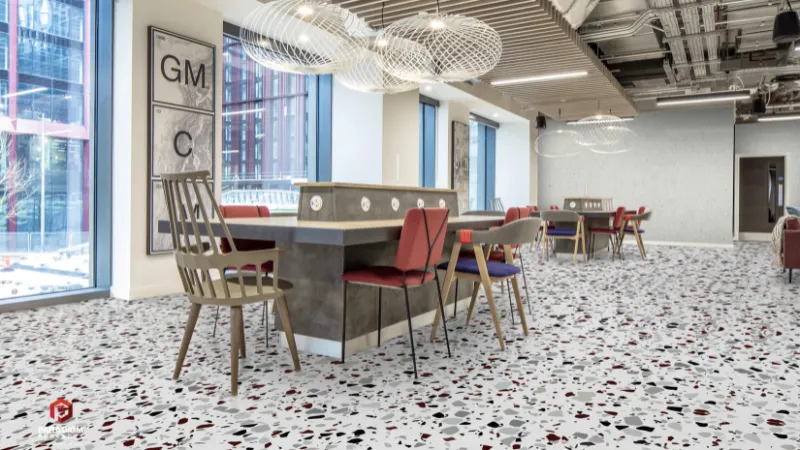
28
MAY
2026
The boundary between interior and exterior design has been dissolving for years. Architects and landscape designers are no longer treating the outdoors as an afterthought — they're specifying the same quality of material for a terrace or courtyard that they would for a five-star lobby. That shift has brought terrazzo into conversations it rarely appeared in a decade ago.
For most of its history, terrazzo was an interior material. Its appeal — the richness of marble aggregates embedded in a polished matrix, the endless colour range, the seamless surface — felt suited to hallways, hotel lobbies, and statement floors inside buildings. But as outdoor living and commercial landscape design have matured, the question has changed from should terrazzo be outdoors to how do we make it work?
The short answer: yes, terrazzo can perform excellently in outdoor environments — but only when the specification process respects the conditions it will face.
The material itself is not the obstacle. The challenge lies in the system — the specific composition, finish, sealing, substrate, drainage design, and installation method all determine whether outdoor terrazzo becomes a durable design asset or an expensive problem.
Indoor terrazzo systems are built for controlled environments. They are designed around foot traffic, occasional moisture, and temperature stability. Outdoor systems face a fundamentally different set of stresses: direct UV radiation, thermal expansion and contraction from seasonal temperature swings, pooling water, freeze-thaw cycles in colder climates, and surface-level abrasion from outdoor use.
The type of binder matrix matters significantly here. Epoxy-based terrazzo systems tend to be moisture-sensitive and are less suited to outdoor applications. Cement-based systems, by contrast, offer better thermal tolerance and bond strength in exposed conditions. Marble terrazzo surfaces, when sealed with UV-resistant impregnating sealants, can retain their character and structural integrity through years of outdoor exposure — but the composition and installation must be outdoor-grade from the start.
The growing interest among design professionals isn't coincidence. Several converging trends in architecture and landscape design are making outdoor terrazzo an increasingly logical specification choice.
One of the strongest drivers is the desire for visual flow between interior and exterior spaces. Matching indoor marble terrazzo surfaces with outdoor paving creates a continuity that no tile or modular paving product can replicate as cleanly. In contemporary residential projects and high-end hospitality design, this seamless material language is becoming a benchmark — not a luxury.
On patios and walkways with consistent foot traffic, a properly installed terrazzo surface resists wear without the joint failures or surface degradation common in modular paving systems. Its monolithic nature eliminates the weak points that appear over time in tile grout lines or paver joints — particularly under heavy or repeated use.
Few outdoor materials offer the design range that terrazzo does. Custom aggregate combinations, controlled colour mixes, embedded patterns, and border detailing give architects and landscape designers a genuinely bespoke material language — not constrained by manufacturer tile ranges or standard slab sizes. This is especially relevant for large commercial outdoor spaces where generic paving products fall flat aesthetically.
Unlike timber decking or loose paving that requires annual re-sanding, sealing, or replacement of damaged units, outdoor terrazzo — once correctly sealed and installed — demands minimal ongoing maintenance. For commercial clients and facilities managers, the long-term operational cost is often lower than materials that appear cheaper upfront.
Terrazzo performs differently depending on context. Understanding where it genuinely excels prevents misapplication.
Patios: Private patios are one of the strongest use cases. Controlled foot traffic, design-forward clients, and the goal of interior continuity align naturally with outdoor terrazzo. Shade coverage from pergolas or overhangs further reduces UV and thermal stress on the surface.
Courtyards: Enclosed or semi-enclosed courtyards offer partial protection from the elements while delivering high visual impact. Drainage design becomes critical here — water should never be allowed to pool on the surface or sit against walls and edges.
Poolside Zones: Terrazzo's seamless, grout-free surface is hygienic and visually clean around pools. However, a slip-resistant finish must be specified, and the matrix and sealant need to be chemically resistant to chlorine and pool water contact.
Outdoor Lounges and Commercial Terraces: Restaurants, hotels, and mixed-use developments are increasingly using outdoor terrazzo to extend the interior design language onto their terraces and alfresco dining areas. The material holds up well under furniture, regular cleaning, and moderate weather exposure when correctly installed.
Commercial Walkways and Plazas: High foot-traffic zones in retail or civic environments are viable with commercial-grade outdoor terrazzo systems, provided the structural slab beneath is designed for outdoor thermal movement and drainage is adequately planned.
This is where most specification errors happen. Getting these factors right determines whether the project succeeds or fails.
Slip Resistance: A polished terrazzo finish that looks stunning indoors can become dangerously slippery when wet outdoors. Outdoor installations should specify a honed, bush-hammered, or grit-blasted finish to achieve appropriate slip resistance ratings. This is non-negotiable, especially in poolside or rain-exposed zones.
UV Exposure: Prolonged UV exposure can cause colour shift or binder degradation in some terrazzo systems. UV-stable pigments and UV-resistant sealants must be specified. Marble aggregates are generally stable under UV, but the binding matrix and any coloured pigmentation need to be assessed for outdoor use.
Moisture Handling: Terrazzo is not inherently waterproof. Without proper sealing, moisture ingress can lead to staining, aggregate corrosion, or subsurface damage. An impregnating penetrating sealant — rather than a surface coating — allows the material to breathe while repelling water.
Surface Finish Selection: The finish chosen affects both aesthetics and performance. Matte and honed finishes are generally more suitable outdoors than highly polished surfaces, offering better grip and lower glare in natural sunlight.
Drainage Planning: Outdoor terrazzo must be laid on a substrate with sufficient slope to direct water away from the surface. Standing water accelerates surface wear and increases the risk of subsurface moisture damage over time.
Climate Conditions: In regions with extreme temperature variation — cold winters with frost cycles, or intense summer heat — the substrate design must accommodate thermal movement. Expansion joints need to be incorporated to prevent stress cracking in the terrazzo surface.
Being clear about the limitations of outdoor terrazzo is part of specifying it responsibly.
Installation Complexity: Outdoor terrazzo is not a product you can hand off to a general contractor. It requires experienced terrazzo installers who understand outdoor-specific substrate preparation, joint placement, and sealing protocols. Poor installation is the single largest cause of outdoor terrazzo failure.
Cracking Risk: If the substrate beneath the terrazzo moves, settles unevenly, or lacks adequate expansion joints, cracking will follow. This is not a failure of the material — it's a failure of installation and structural planning. The solution is rigorous substrate specification, not avoiding terrazzo.
Surface Heat in Direct Sunlight: Dark or densely aggregated terrazzo surfaces can absorb significant heat in direct sunlight, making them uncomfortable underfoot in summer. Lighter aggregate combinations or shaded installation zones mitigate this.
Longer Project Timelines: Site-applied terrazzo curing, grinding, and sealing takes time. Projects with tight timelines need to account for curing periods before the surface can be put into use.
To explore how terrazzo also enhances indoor living spaces, read Why Terrazzo Surfaces Are the Perfect Choice for Modern Homes.
Maintenance is straightforward when the installation is done correctly.
Cleaning: Regular sweeping and damp mopping with a pH-neutral cleaner is sufficient for routine care. Avoid acidic cleaners — vinegar, citrus-based products, or bleach — as they can etch the marble aggregate and degrade the sealant over time.
Sealing: An outdoor terrazzo surface should be re-sealed every one to three years depending on traffic, climate, and sun exposure. Use a penetrating impregnating sealant rather than a topical film-forming sealant, which can peel or trap moisture beneath it.
Seasonal Care: In colder climates, avoid using metal snow removal tools that can scratch the surface. Do not use de-icing salts, which are corrosive to both the terrazzo matrix and any metal inlays. After winter, inspect the surface for any cracking related to freeze-thaw movement.
Preventing Long-Term Damage: Address any cracks or chips promptly. Small repairs are straightforward for experienced installers — left untreated, minor damage allows moisture ingress that compounds over time.
Specifying outdoor terrazzo is only as reliable as the supplier backing the project. There are specific things professionals should assess before committing to a supplier relationship.
Material Consistency: Outdoor projects — especially large-scale commercial ones — require batch consistency across aggregate colour, size, and matrix composition. A supplier who cannot guarantee this creates visible variation across a finished surface.
Outdoor-Grade Finishes: Not all terrazzo suppliers offer finishes appropriate for exterior applications. Confirm that the supplier can provide honed, textured, or slip-resistant finish options that meet outdoor safety standards.
Technical Support: The best suppliers bring technical expertise to the project — not just material. They should be able to advise on substrate requirements, joint placement, sealant selection, and finish specification based on the project's climate and use context.
Installation Network: Suppliers with relationships with experienced outdoor terrazzo installers reduce project risk significantly. If a supplier can only supply material but has no guidance on installation, that's a gap that often shows up in the finished project.
Bulk Project Capability: For commercial-scale outdoor spaces, supply chain reliability matters. The supplier should be able to confirm lead times, batch volumes, and consistent availability across a project's installation schedule.
Using indoor terrazzo systems outdoors: This is the most frequent and costly mistake. Indoor systems — particularly epoxy-based — are not engineered for UV exposure, thermal movement, or outdoor moisture levels. Always confirm the system is specified for exterior use.
Ignoring drainage and slope: Flat terrazzo installations outdoors will pool water. Drainage must be designed into the substrate before any terrazzo work begins. Retrofitting drainage into an installed surface is expensive and often structurally disruptive.
Prioritising aesthetics over functionality: A dark, high-polish marble terrazzo surface might look extraordinary in renders. Outdoors, it may be dangerously slippery when wet and absorb enough heat to be unusable in summer. Functionality and finish selection must lead the specification process — aesthetics follow.
Underestimating installation expertise: Treating outdoor terrazzo as a standard flooring job and handing it to unspecialised contractors is a consistent source of project failures. The installation crew matters as much as the material.
Is terrazzo slippery when used outdoors? A polished terrazzo finish can be slippery when wet, which is why outdoor specifications should always use a honed, textured, or treated finish with a verified slip resistance rating. The right finish makes outdoor terrazzo safe for regular use in rain-exposed and poolside environments.
Can terrazzo handle rain and direct sunlight? Yes, when correctly sealed and composed for exterior use. UV-stable pigments, cement-based matrices, and impregnating sealants protect marble terrazzo surfaces from both sun and rain exposure. However, ongoing re-sealing every one to three years is necessary to maintain that protection.
Does outdoor terrazzo require sealing? Yes, sealing is essential. An impregnating penetrating sealant is the correct choice for outdoor terrazzo — it repels moisture without forming a film that can trap water beneath the surface or peel under UV exposure.
How long does outdoor terrazzo last? A correctly specified and installed outdoor terrazzo surface can last decades. The material itself is not the limiting factor — substrate quality, drainage design, sealing discipline, and installation expertise determine the long-term outcome far more than the terrazzo composition alone.
Is outdoor terrazzo suitable for cold climates? It can be, provided the substrate includes adequate expansion joints to manage freeze-thaw thermal movement, and de-icing salts are avoided. In severe freeze-thaw climates, the installation design needs to specifically account for this stress — it is manageable but not something to improvise.
Terrazzo is not a material that belongs exclusively inside buildings. When the specification is correct — outdoor-grade composition, appropriate finish, proper substrate, competent installation, and a disciplined sealing regime — it brings everything that makes it compelling indoors to outdoor environments as well.
The seamless design language, the durability under real-world use, the low long-term maintenance burden, and the visual richness of marble terrazzo surfaces are all available to outdoor projects. The condition is discipline in the specification process and honesty about what outdoor environments actually demand.
For architects, landscape designers, and builders working on serious outdoor projects, the question is no longer whether terrazzo belongs outdoors. It's whether the project team is prepared to specify and install it correctly.
Looking to source outdoor-grade terrazzo for your next project? Connect with our team for technical consultation, finish samples, and project-scale supply

 24 September, 2026
Festive Home Makeovers: Refreshing Kitchens & Interiors with Stone
 20 September, 2026
 17 September, 2026
CNC Precision Cutting: How Technology Improves Edge & Inlay Work
 13 September, 2026
NSF & Food Safety Certifications: What They Mean for Quartz Surfaces
 12 September, 2026
Whatsapp Chatx
Hi! Click one of our representatives below to chat on WhatsApp or send us email to sales@paradigmquartz.in
 |
Contact Us +91 99440 00900 |